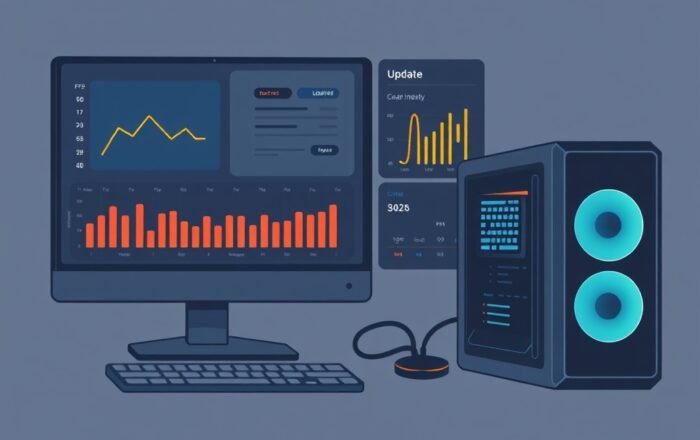
Tune your rig, stay current, and game with confidence.
If you’re looking for a practical, professional approach to games tech befitnatic, you’re in the right place. This guide focuses on real-world setup, performance tuning, and update readiness so your gaming experience stays smooth, responsive, and dependable—especially as games and drivers evolve.
What “games tech befitnatic” means for your gaming setup
The phrase “games tech befitnatic” reflects a structured way of improving your gaming experience: combining smart configuration, consistent maintenance, and informed updates. Instead of random tweaks, you work from priorities—hardware readiness first, then software settings, then optimization—while keeping an eye on changes that affect performance.
In practice, that means you’ll build a setup that can handle today’s titles and tomorrow’s updates. You’ll also learn what to monitor and when to change settings, so improvements don’t come at the cost of stability or convenience.
The three pillars: Setup, Performance, Updates
- Setup: Ensure your system components, drivers, peripherals, and storage are configured for gaming.
- Performance: Target the bottlenecks that actually affect your experience—frame pacing, latency, responsiveness, and load times.
- Updates: Maintain a repeatable process for game patches, driver releases, and system changes.
If you want a broader foundation around how this site approaches technology and gaming workflows, explore About Website Befitnatic: Features, Purpose, and How to Get Started. It provides context for how updates, setup guidance, and gaming tech topics are organized.
Start with a gaming-ready baseline (before you tweak)
Performance tuning is far more effective when your baseline is solid. Many “FPS problems” aren’t true performance limits—they’re symptoms of misconfiguration, outdated software, or an unstable storage/driver environment.
1) Verify core system compatibility
Before changing settings, check that your system is aligned with the games you play:
- GPU drivers: Confirm you’re using a current driver version suitable for your GPU model.
- RAM capacity and speed: Ensure you meet minimum requirements and that memory is stable.
- Storage health: If you use an SSD, confirm enough free space and avoid running near full capacity.
- Power delivery: Stable power reduces crashes, stutters, and instability during peak loads.
2) Use a clean driver and software approach
Driver issues can masquerade as “game optimization problems.” Adopt a repeatable approach:
- Update drivers only when you need to, and note what changed.
- If you troubleshoot, document the previous version and return if performance regresses.
- Keep background software minimal during competitive or latency-sensitive play.
3) Build a sensible graphics settings strategy
Instead of maximizing every setting blindly, use a balanced strategy based on your goals:
- Competitive/low-latency: Prioritize stable frame pacing, responsive input, and minimal visual delays.
- Story/cinematic: Prioritize visual quality and consistent resolution with acceptable frame targets.
- Hybrid approach: Use presets as a starting point, then refine shadow quality, texture filtering, and effects.
For an end-to-end performance and configuration perspective, you may find it helpful to review Gaming Tech Befitnatic: A Professional Guide to Performance, Setup, and Updates. It aligns with the same mindset: build a stable foundation, then iterate.
Performance tuning that actually matters
When people talk about performance, they often focus only on average FPS. However, your experience is shaped by frame pacing, input responsiveness, and how quickly the game loads and streams assets. Here’s a professional checklist that targets those real bottlenecks.
How games tech befitnatic approaches performance optimization
In the games tech befitnatic workflow, optimization begins with measurement, then moves to targeted changes. This reduces trial-and-error and helps you identify what improves your experience versus what simply changes the look without affecting smoothness.
Step 1: Measure what’s limiting your system
Use in-game performance overlays or reliable monitoring tools to observe:
- CPU vs GPU utilization: If GPU utilization is low while FPS is constrained, you may be CPU-limited.
- Frame time consistency: Spikes often cause stutter even when average FPS looks fine.
- Thermals: Throttling can mimic “random stutters.”
- Memory usage: High RAM/VRAM usage can lead to paging, streaming delays, or hitching.
Step 2: Adjust settings for stability and pacing
Once you identify the limiting factor, choose settings that improve consistency:
- Shadows: Often a major performance lever; reduce quality or distance.
- Volumetrics and effects: Lower costs that are expensive during action scenes.
- Texture quality: Increase only if VRAM headroom allows; avoid pushing into heavy swapping behavior.
- Resolution scaling: Use when it provides smoother performance without visibly harming clarity.
Step 3: Configure frame delivery features carefully
Many modern systems include features that can improve smoothness, but they’re not one-size-fits-all. If your platform supports technologies like upscaling or frame generation, treat them as experiments:
- Test in the same scenario (same map, same movement patterns).
- Compare feel, not only numbers.
- If you notice input delay or “odd” motion behavior, revert to a more predictable configuration.
System maintenance for consistent gameplay
Even with perfect game settings, long-term performance can degrade. Maintenance prevents background changes from quietly eroding your experience.
Keep drivers, Windows components, and firmware organized
- Track updates: Write down what you update and when.
- Update firmware strategically: BIOS, motherboard, and controller firmware should be updated when needed, not blindly.
- Don’t stack changes at once: If performance drops, you want to know what caused it.
Manage startup and background load
Background apps can increase CPU overhead, cause disk contention, or interfere with overlays. A professional approach includes:
- Disable unnecessary startup tasks.
- Temporarily close launchers, recording tools, and browsers during competitive sessions.
- Use a consistent “gaming mode” profile when possible.
Improve load times through storage hygiene
Load times and asset streaming depend heavily on your storage configuration.
- Keep the OS drive from running too full.
- Ensure the game is installed on an SSD if available.
- Consider defragmentation policies (where applicable) and verify drive behavior after updates.
Update readiness: how to stay ahead without risking stability
Updates are essential for security and performance improvements, but they can also introduce new issues. The goal is to update with confidence—using a repeatable routine that reduces risk.
Here’s where games tech befitnatic becomes practical: treat updates like scheduled system maintenance, not random events. When you plan your workflow, you avoid spending your best gaming time troubleshooting.
Before you update (the quick checklist)
- Check patch notes: Look for performance-related changes, control/input changes, or known issues.
- Confirm your update schedule: Decide when you’ll test the change.
- Gather your baseline: Note your current settings or save profiles.
- Close heavy background apps: Reduce variables when testing.
After you update (test method, not guesswork)
- Test a short benchmark routine: Prefer a repeatable route through menus and gameplay sections.
- Check for stutter and frame pacing: Look for spikes in frame time rather than only average FPS.
- Verify input feel: Ensure aim responsiveness and movement timing match your expectations.
- Confirm stability: Watch for crashes, unusual thermal behavior, or driver resets.
If you want an example of how update-focused optimization guidance is presented, review Befitnatic Game Update: New Features, Changes, and Optimization Tips. It’s aligned with the idea of understanding what changed and then tuning your setup to match.
Common issues and professional troubleshooting
Even with a careful process, problems can appear. Use a structured approach so you don’t waste time on random fixes.
Issue: Stuttering during gameplay
- Check for thermal throttling and monitor CPU/GPU temps.
- Review background apps and overlays.
- Lower graphics features that trigger heavy streaming (volumetrics, shadows, effects).
- Verify storage is healthy and has adequate free space.
Issue: FPS drops in specific areas
- Lower settings that scale with scene complexity.
- Test whether the game is CPU-limited by observing utilization patterns.
- Try a consistent resolution scaling setting to maintain stable frame delivery.
Issue: Driver crashes or recovery messages
- Roll back to a known stable driver if the issue started after an update.
- Consider verifying game files in the launcher.
- Reduce overclocking-related instability (CPU/GPU/RAM), if applicable.
- Ensure power delivery and temps are within safe operating ranges.
Practical setup templates for different gamer profiles
Not everyone wants the same balance of visuals and responsiveness. Below are setup templates you can adapt—then refine with your own measurement results.
Template A: Competitive performance profile
- Prioritize consistent frame pacing and low latency.
- Lower shadows and effects; keep textures moderate.
- Use a stable resolution and avoid frequent changes mid-session.
- Minimize background tasks and disable non-essential overlays.
Template B: Balanced all-around profile
- Use a preset as a starting point, then adjust the biggest cost areas.
- Keep resolution scaling conservative to preserve clarity.
- Maintain thermal headroom to reduce stutter caused by throttling.
Template C: Visual-first profile
- Focus on image quality features that improve perceived sharpness and detail.
- Set targets that avoid VRAM pressure.
- Accept a performance tradeoff only if frame pacing remains stable.
When updates roll out, revisit these templates with a testing mindset. Small changes in a patch can shift performance characteristics, and your “best settings” today might need slight adjustments later.
Conclusion: build a resilient games tech befitnatic workflow
To get long-lasting improvements, follow a resilient workflow rather than chasing one-off tweaks. The essence of games tech befitnatic is simple: prepare a solid baseline, measure before you change, and update with a repeatable process so stability stays intact.
If you’re planning upcoming updates, you can also consult Befitnatech Game Update: What’s New, What Changed, and How to Get the Most Out of It for a structured way to interpret changes and optimize your settings accordingly.
With consistent maintenance and targeted tuning, you’ll spend less time troubleshooting and more time gaming—confident that your setup is ready for what’s next.
FAQ: Games Tech BeFitnatic
How often should I update my GPU drivers?
Update when you need compatibility, fixes, or performance improvements. If you’re stable and there’s no relevant change, you can wait—then test after updating.
Do graphics presets guarantee good performance?
Presets are a starting point, not a final solution. Use them to establish a baseline, then refine the settings that impact pacing and responsiveness most in your games.
What should I test after a game patch?
Test repeatable scenarios for stutter and frame pacing, check input feel, and confirm stability during typical gameplay moments—not only in menus.
Why does FPS average not reflect smoothness?
Average FPS can hide frame time spikes. Smooth gaming depends on consistent frame delivery, not just high averages.